
The collaboration between the Department of Pharmacy and Food Sciences of the University of the Basque Country (UPV/EHU), specifically the research group led by Dr José Luis Pedraz, and Laboratorios ROVI seeks to develop new 3D bioprinting platforms for the encapsulation and maintenance of pancreatic spheroids, a technology with potential applications in regenerative medicine.
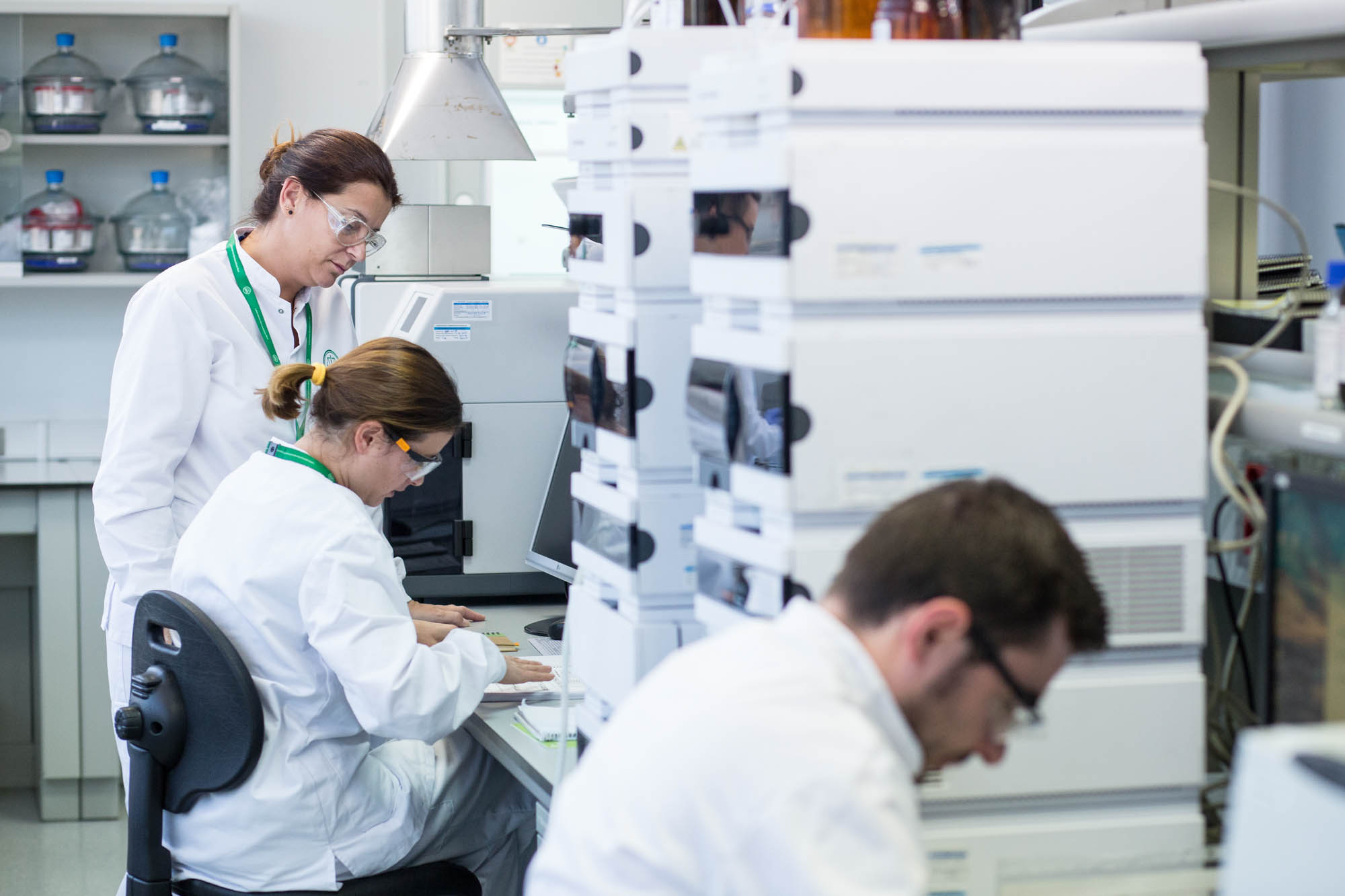
The NanoBioCel research group, led by Dr José Luis Pedraz of the Department of Pharmacy and Food Sciences of the University of the Basque Country (UPV/EHU), with the participation of Denis Scaini, an Ikerbasque researcher, and Martina Gruppuso, a postdoctoral researcher, is collaborating with Laboratorios Farmacéutics ROVI on the development of new technologies for regenerative medicine as part of the European IPCEI Med4Cure.
The UPV/EHU’s participation focuses on the research project “Encapsulation of Pancreatic Spheroids Using Bioprinting Techniques”, a line of research that aims to develop advanced methods to maintain the viability and functionality of three-dimensional cellular structures with potential applications in regenerative therapies.
The research team is working on the development of three-dimensional scaffolds to optimise the culture and maintenance of pancreatic spheroids, as well as the design of biocompatible bioinks and the development of 3D bioprinting procedures suitable for handling these organoids. The final objective is to generate three-dimensional structures that promote cell survival and allow new biomedical applications related to tissue regeneration to be studied.
As part of the work carried out, the UPV/EHU group has recently expanded its experiments to include functional studies to assess the response capacity of pancreatic spheroids through glucose stimulation assays and insulin quantification, thereby contributing to a more comprehensive characterisation of these biological models.
This collaboration forms part of the LAISOLID project, led by ROVI and financed by the Technological Development and Innovation Centre (CDTI) under Spain’s Recovery, Transformation and Resilience Plan. associated to the IPCEI Med4Cure, the first Important Project of Common European Interest (IPCEI) in the healthcare sector. The programme aims to strengthen Europe’s biomedical research and innovation capacity and accelerate the development of advanced therapeutic solutions.
UPV/EHU’s contribution highlights the importance of university research in strategic areas like 3D bioprinting, tissue engineering and regenerative medicine. Likewise, this type of collaboration promotes knowledge transfer between universities and industry and reinforces the role of publicly-funded research in the development of technologies with a potential impact on public health.
What is IPCEI Med4Cure?
IPCEI Med4Cure is Europe’s first Project of Common European Interest dedicated to the healthcare sector. Its objective is to promote research, innovation and industrial scale-up projects that enable the development of new medicines, healthcare technologies and advanced pharmaceutical manufacturing processes, strengthening European strategic autonomy in key healthcare sectors.